

New University Chaplain Calls Olivet Community to Receive, Not Achieve
“What we need more than anything in this room is not a chaplain preaching a sermon. We need an outpouring of the love of the Father.”
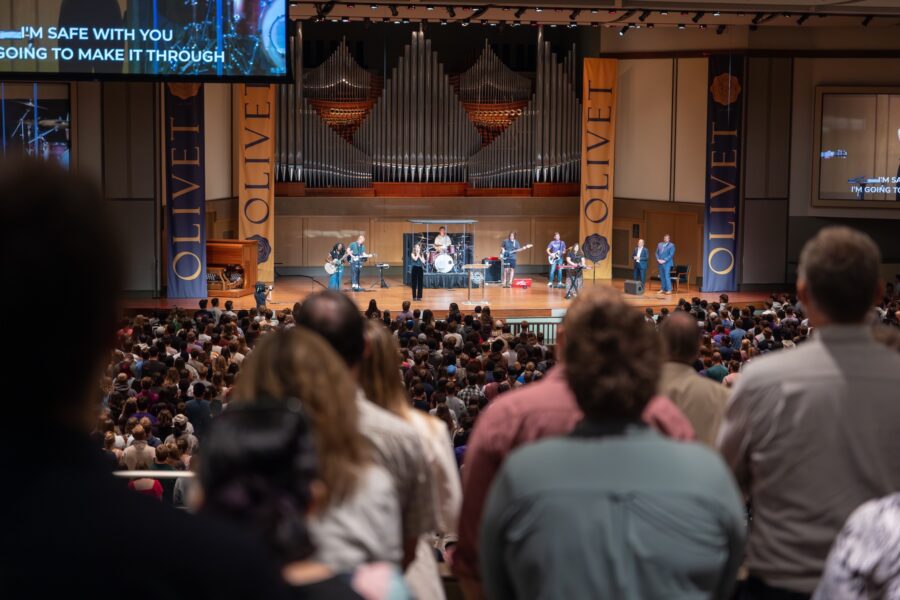
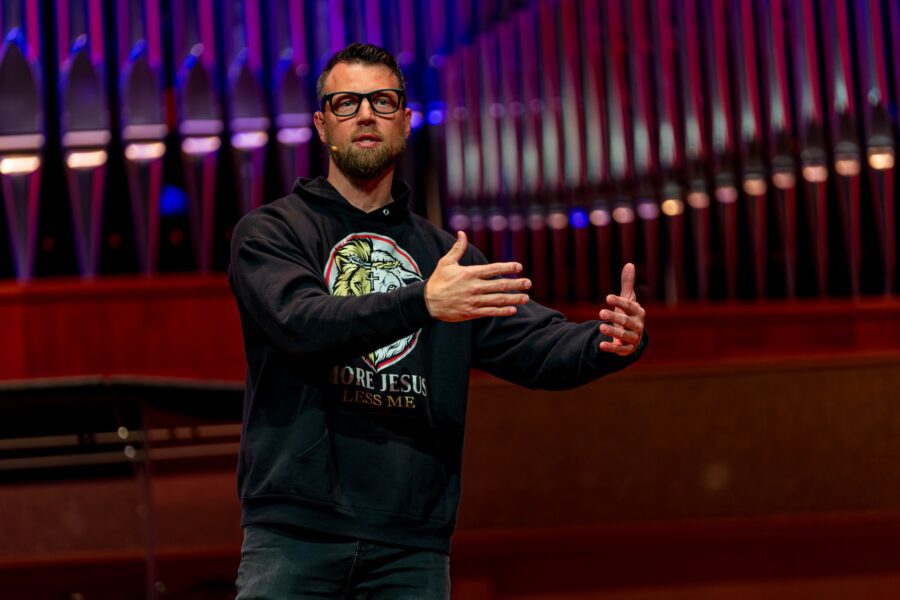
With that prayer, Ryan Green, the new university chaplain at Olivet Nazarene University, opened chapel with an invitation — not to perform, impress, or check a box, but to encounter the presence of God.
Green began by reminding students why the University gathers for chapel twice each week. “We don’t got to — we get to,” he said, emphasizing a posture of expectation rather than obligation. Chapel, he explained, is a time to reorient life around “Bible Jesus — not political Jesus, not social Jesus, but the Jesus who bled, suffered, died, and rose again.”
Early in the message, Green welcomed students into a new teaching series through the book of Ephesians, beginning with chapter one. Before unpacking the passage, he spoke directly to the cultural pressures students face every day.
“We live in an image-obsessed world,” Green said, pointing to the ways people curate, filter, and reinvent themselves in search of identity. That pursuit, he noted, often leads to comparison, insecurity, and exhaustion. “We end up killing ourselves trying to achieve an identity that God says is meant to be received, not achieved.”
Reading from Ephesians 1:1–14, Green highlighted the Apostle Paul’s opening words to the church in Ephesus: “to the saints.” Before correcting behavior or addressing brokenness, Paul names identity.
“He doesn’t say ‘to the mess-ups’ or ‘to the failures,’” Green explained. “He calls them saints. God names you before the world labels you.”
That truth, Green said, shaped his own life. He shared a personal story from middle school when a trusted adult spoke damaging words over him, saying he would “never amount to anything.” For a time, Green believed it — until he encountered Christ.
“God had something different to say about me,” he said. “What God says about you is more true than what anyone else has said about you.”
Green explained that Ephesians follows a clear structure: chapters one through three focus on who believers are in Christ, while chapters four through six address how believers live. Identity comes before action.
“When you get identity wrong, you’ll always use achievement to fix insecurity,” he said. “And that is exhausting and unfulfilling.”
Throughout the message, Green returned to a central theme: identity is not something believers earn. It is something they receive. He described Ephesians 1 as “the great Trinitarian rescue mission” — where the Father plans salvation, the Son accomplishes it, and the Holy Spirit applies it.
“Nothing in this passage is waiting on you to achieve something,” Green said. “Our job is simply to wake up and receive what God has already accomplished.”
As chapel drew to a close, Green invited students to respond in two ways. Some were invited to step forward to place their faith in Christ for the first time. Others were invited to release false identities — labels of shame, failure, fear, or inadequacy — by writing them down and physically laying them aside.
“You are wanted by God, not tolerated by God,” Green said. “You are chosen. You are loved. You are family.”
He ended chapel by blessing the Olivet community and encouraging students to live from their God-given identity rather than the world’s expectations.
“May you live free, forgiven, and fully out of your identity in Christ today.”
To watch the full message, click here.
Visit Olivet.edu/Chapel for more information.