

The text was meant to say, I love you. But what our son heard was, Do you think I can’t handle this?
We didn’t realize it at the time. All we knew was that somewhere between move-in day and midterms, something subtle had shifted. Our intentions hadn’t changed. Our love hadn’t changed. But the way our love was being heard had.
That moment forced us to slow down and ask an uncomfortable question: How can love be sincere — and still miss the mark?
It’s a question many families wrestle with during the college years. Students are stretching toward independence. Parents are learning how to stay connected without hovering. Both care deeply. Both want the relationship to stay strong. And yet, misunderstandings seem to multiply just when closeness matters most.
For decades, one of the most helpful frameworks for understanding connection has been The 5 Love Languages — the idea that people tend to give and receive love through words of affirmation, quality time, gifts, acts of service or physical touch.
For millions of couples and families, this insight has been transformative. It helps explain why one person feels loved by a heartfelt note, while another feels it most through time together or practical help.
Knowing your love language matters. But over the years, we began to notice something else: Even when people knew their love language — and tried sincerely to express it — it didn’t always fill up that person’s proverbial “love tank.”
The words were right. The effort was genuine. The love was real. And still, something felt off.
That realization didn’t come out of nowhere. It grew out of years of conversation with our longtime friend Dr. Gary Chapman, author of The 5 Love Languages. As we talked together, often circling back to the same questions, we found ourselves drawn to a shared conviction: Even when people know how to express love, something essential can still get lost.
Those conversations eventually shaped the heart of our new book, The Love Language That Matters Most.
What is it? Well, there’s something that matters even more than how you express love: It’s how the other person experiences it.
In other words, what we found is that each of the five love languages has various dialects.
Most of us assume that once we know someone’s love language, we’ve cracked the code. If they value words of affirmation, we offer encouragement. If they value quality time, we make plans. If it’s acts of service, we pitch in.
And that helps, until it doesn’t.
Because within each love language are different ways of hearing love. One person whose love language is affirmation may feel affirmed by praise, while another is moved most deeply by reassurance. One values time through meaningful conversation; another through shared activity. One appreciates practical help when it lightens their load; another when it communicates partnership.
Same language. Different dialect.
When we miss that distinction, love can sound right but feel wrong.
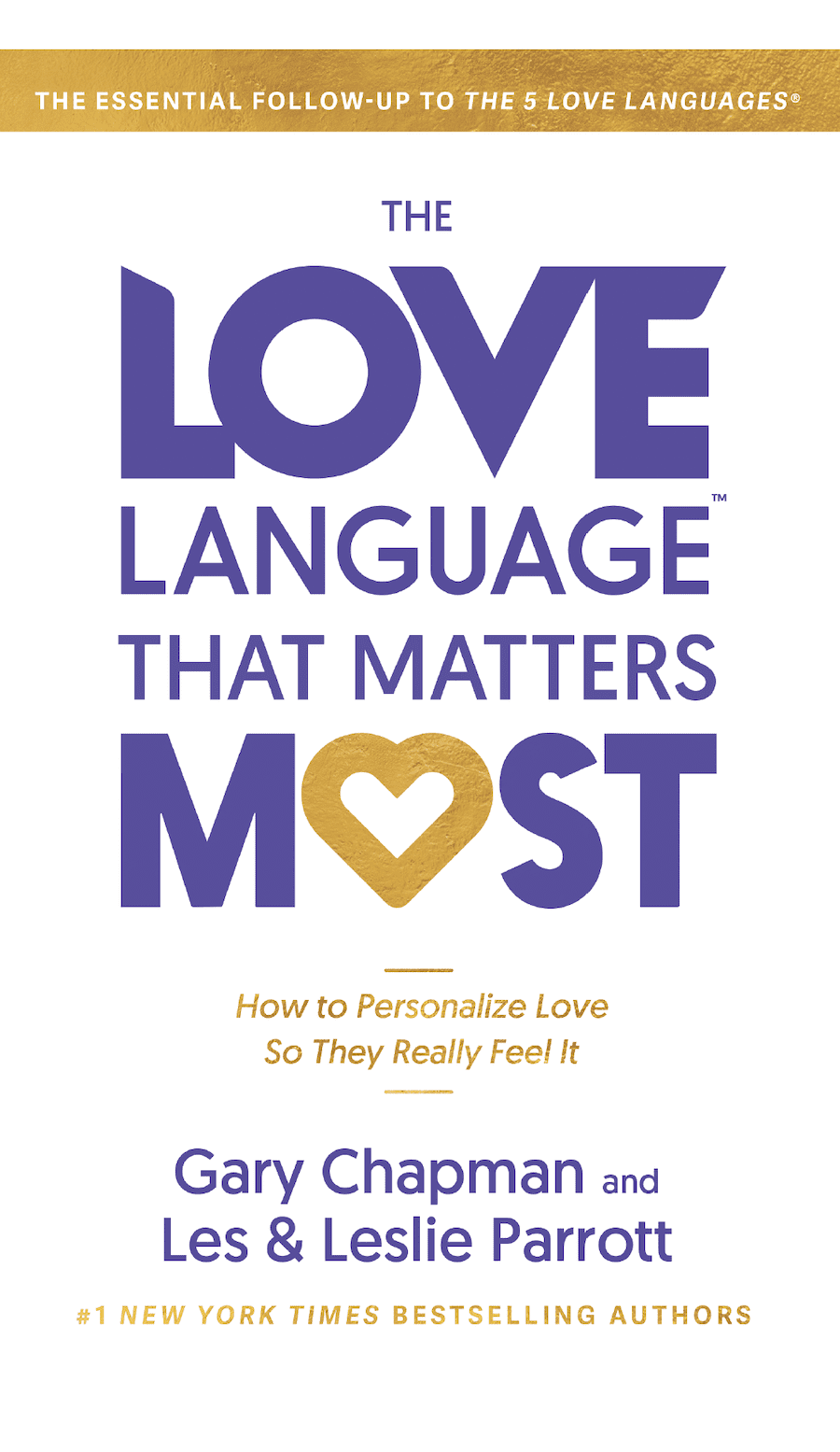 That’s why, in The Love Language That Matters Most, we explore the specific dialects within each of the five love languages. The goal isn’t to love more loudly, but more clearly — to express care in a way that truly resonates with the person you love.
This insight is especially powerful during the college years.
Students are changing rapidly, gaining independence, forming identity, carrying new pressures. What once felt loving may now feel constraining. What once felt distant may now feel respectful. Parents, meanwhile, are learning how to stay connected without crossing invisible lines that didn’t exist before.
Understanding love’s dialect helps both sides adjust — not by guessing, but by becoming more intentional. It replaces assumptions with awareness.
And awareness has a way of softening conversations, lowering defensiveness and reopening connection.
The Five Love Languages Premium Assessment goes beyond identifying your primary love language. It reveals the specific ways your child most naturally experiences love — helping parents stay connected during the college years with clarity, confidence and care. Learn more at https://5lovelanguages.com/store/premium-assessment
From Olivet The Magazine, Abundant Life – Spring 2026. Read the full issue here.